
Inventor & Technical History

Cao Bin and the Origin of China’s First Hydraulic Rapid Impact Compactor

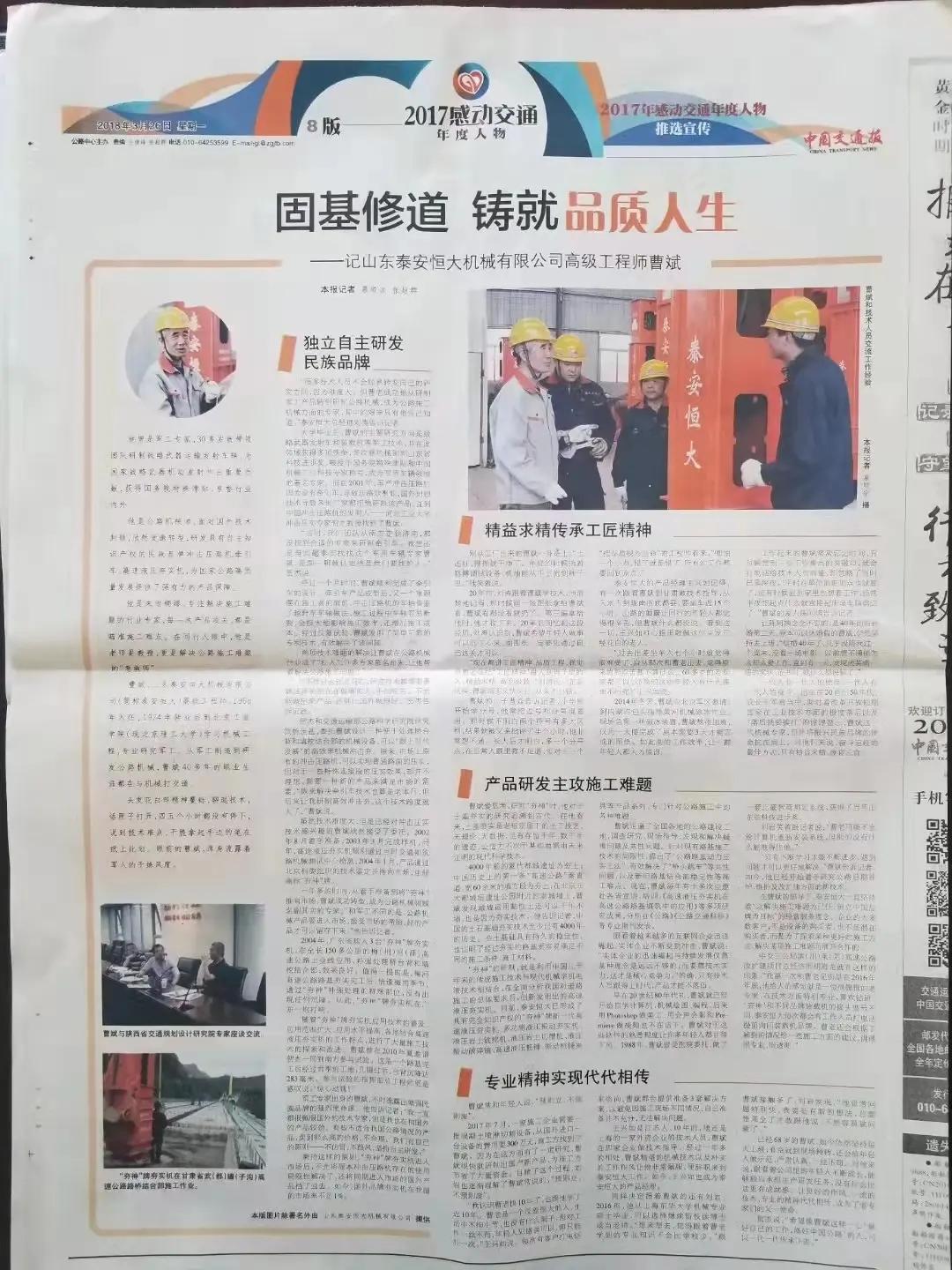
Portrait of Cao Bin speaking at an industry event
Portrait of Cao Bin.

Engineer, inventor, and early technical pioneer

Cao Bin is one of the key engineering figures in the history of China’s hydraulic Rapid Impact Compactor development. Based on the historical narrative presented here and the cited academic literature.

The result was the completion of China’s first hydraulic compactor prototype in early 2003 in Taian, Shandong. This achievement helped fill a domestic technical gap and directly addressed compaction blind zones such as bridge abutment backfill, culvert backfill, and other locations where conventional vibratory rollers could not work efficiently.

2003 China’s first hydraulic compactor prototype completed in Taian, Shandong.
2004 Project passed technical appraisal and was described as a domestic first reaching internationally advanced level.

Historical development: from technical gap to industry definition

This section restructures the supplied historical material into a clear English technical narrative suitable for both professional readers and search engines.

01

The technical gap and the invention trigger: a manual that could not be borrowed

hydraulic compactors entered the view of China’s engineering community in the early years of this century. At that time, this kind of equipment was still regarded as a scarce high-end construction machine in the international market, with a single unit priced at roughly RMB 2.3 million. Very few people in China were involved in its development, and companies that had imported such equipment tended to keep technical documents strictly confidential.

Cao Bin later recalled that domestic road expert Yang Shiji had shown great interest in this efficient compaction technology and once tried to borrow the product manual from a company that had already imported a hydraulic compactor for reference research. The request was flatly rejected. That small incident reflected the lack of domestic technical accumulation in this field and further strengthened the determination to pursue independent development.

At the same time, highway construction in China was demanding better roadbed compaction quality. Areas such as bridge abutment backfill, culvert backfill, road shoulder corners, and other roller-inaccessible zones had long remained engineering weak points. The industry urgently needed a new compaction device that combined strong impact force with high mobility.
02

The formal technical requirement: Yang Shiji’s concept framework

In the early 2000s, Researcher Yang Shiji of the Research Institute of Highway, Ministry of Transport, was among the first to systematically argue for the necessity of developing a new and efficient hydraulic compactor from an academic perspective. He also proposed a clear technical requirement framework:

  • The compaction effect should be no lower than that of a 25 kJ impact roller.
  • The machine should be capable of strengthening locations where impact rollers were not convenient for layered compaction operations.
  • The construction process should not damage the original soil structure or nearby structures.

This technical definition precisely targeted the most prominent compaction blind-zone problem in roadbed construction at that time and set a clear performance boundary for the later invention. Researcher Yang Shiji then entrusted Cao Bin with the conceptual and engineering design of China’s own high-efficiency hydraulic impact compactor.

03

From commission to prototype: Cao Bin and China’s first machine

After accepting the assignment, Cao Bin and the development team devoted themselves to the design process. Following systematic theoretical analysis and engineering trials, China’s first hydraulic compactor was completed in early 2003 in Taian, Shandong.

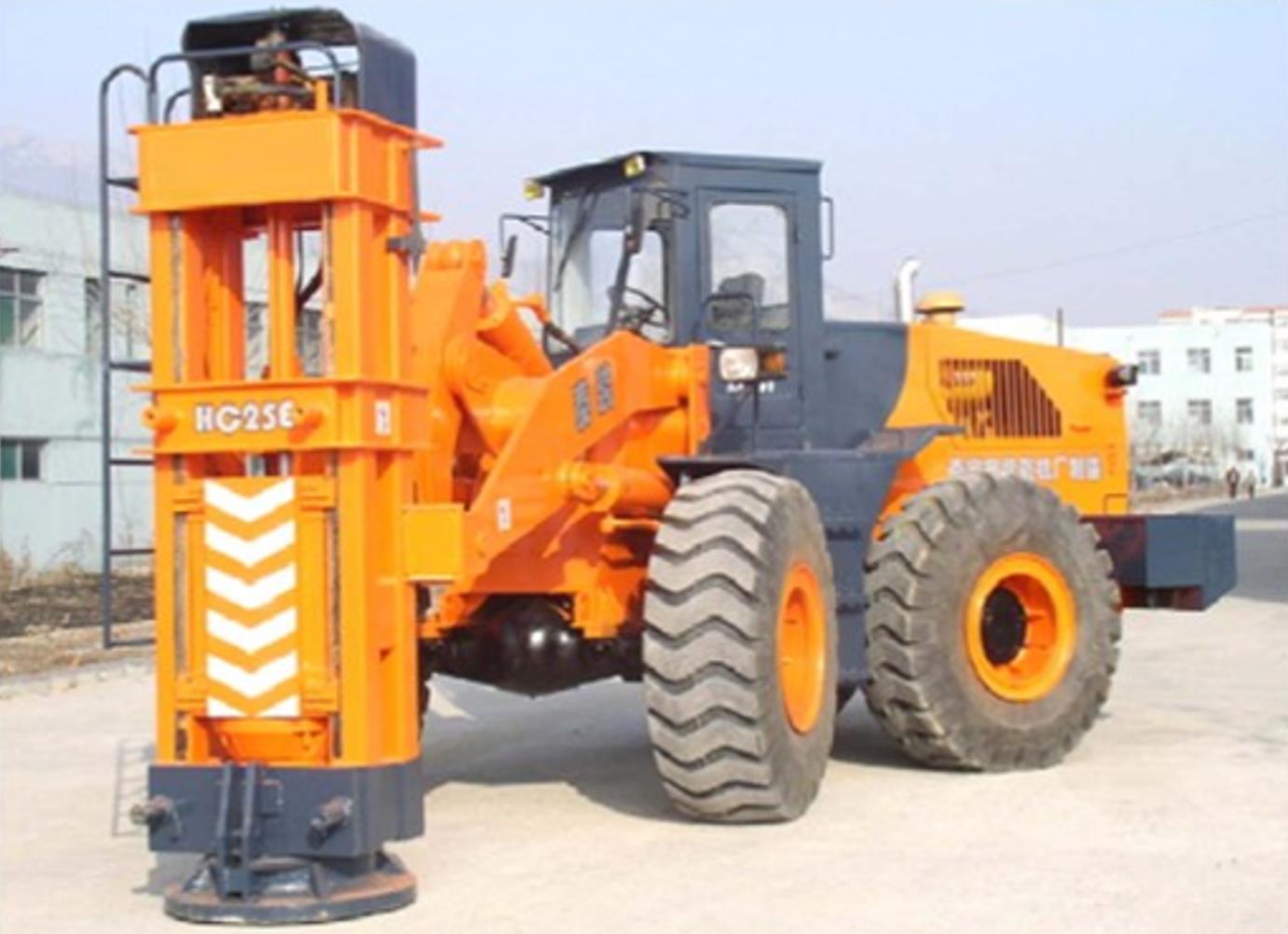
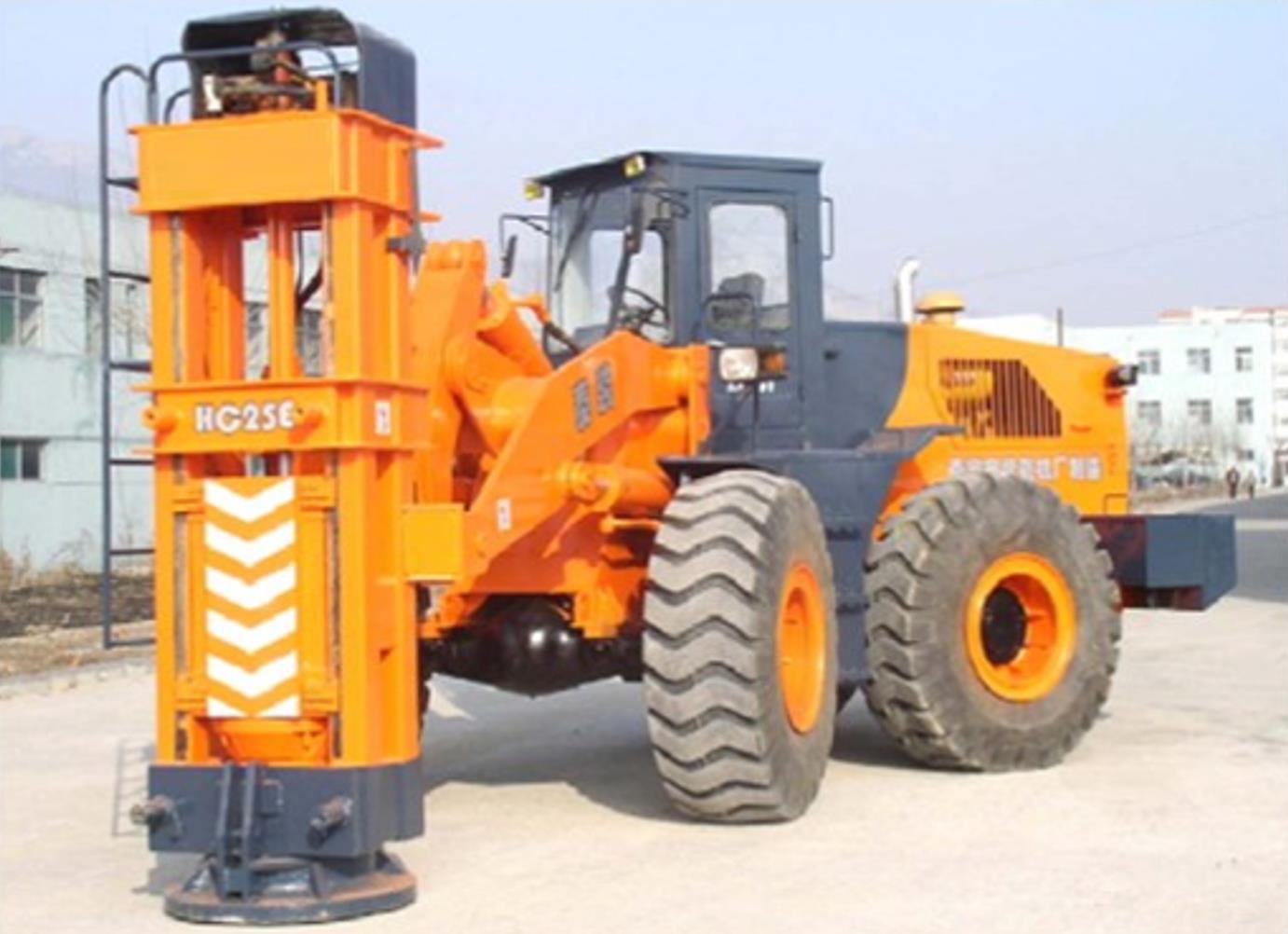
Early prototype of China's first hydraulic compactor mounted on a wheel loader
Early prototype photo of the first-generation hydraulic compactor mounted on a wheel loader.

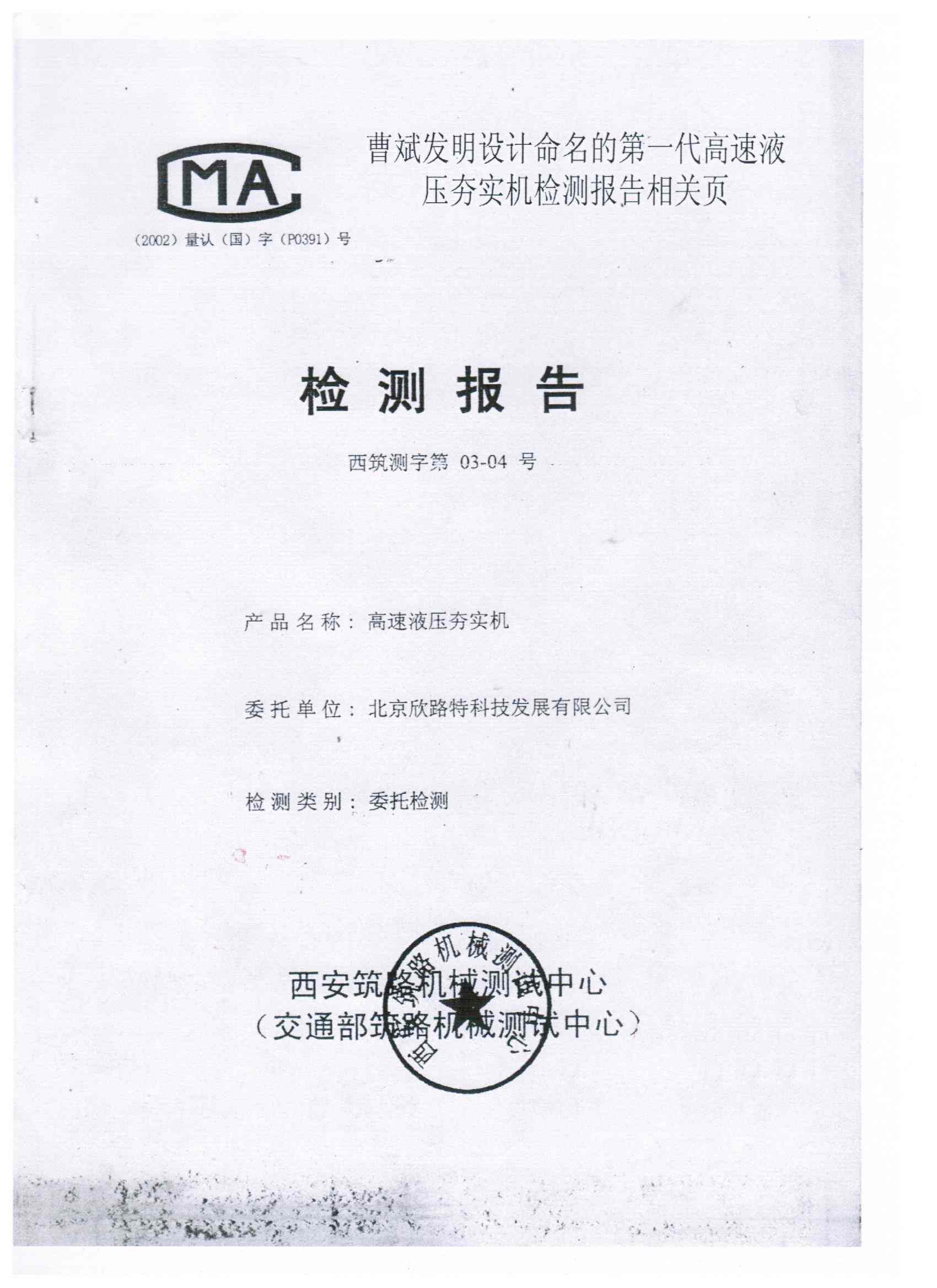
After the prototype was completed, it quickly passed formal testing at the Xi’an Road Construction Machinery Testing Center under the Ministry of Transport system. Field application studies were then carried out on expressway projects in Gansu, Anhui, Guangdong, and other provinces. Multi-province test data showed that the machine achieved the expected compaction effect in roller blind zones such as bridge abutment backfill and pipe trench backfill, confirming the correctness of the chosen technical route.

Technical data of China’s first hydraulic compactor prototype (2003)

Parameter Value
Hammer mass 2.5 tons
Impact potential energy 30 kJ
Carrier equipment 5-ton wheel loader
Development location Taian, Shandong Province
04

National-level appraisal: a domestic first reaching internationally advanced level

In January 2004, the project “ Hydraulic Compactor and Its Application Research” passed technical appraisal organized by the Beijing Municipal Science and Technology Commission. The appraisal conclusion was explicit: “a domestic first, reaching internationally advanced level.”

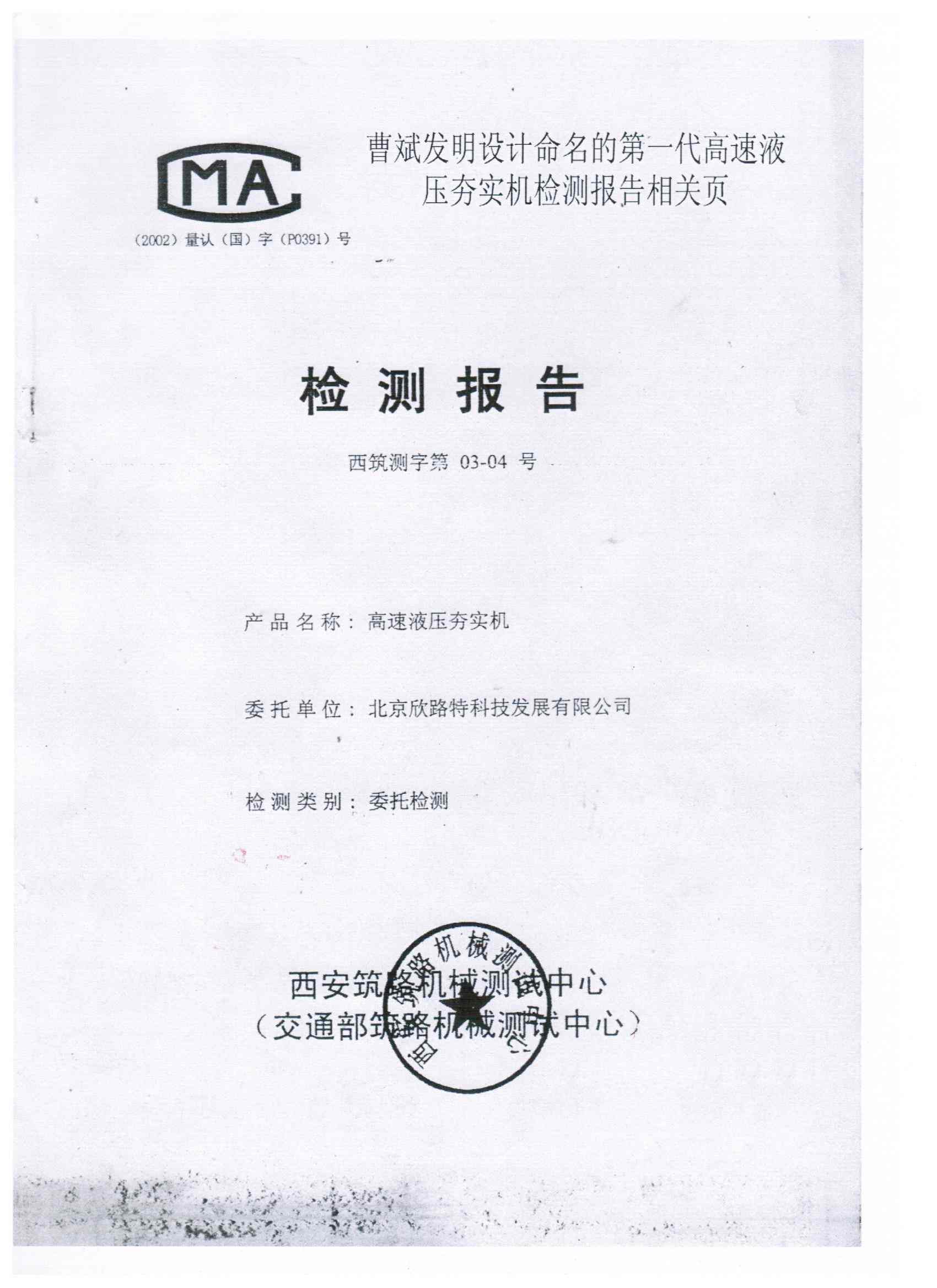
Technical appraisal related image associated with the Beijing municipal appraisal process
Technical appraisal related image associated with the appraisal process and early testing documentation.

This conclusion carried double historical significance. First, it confirmed the original domestic status of the product and formally ended the period in which China had no self-developed product in this category. Second, the phrase “reaching internationally advanced level” placed the starting point of China’s own technology directly at the level of mainstream international standards.

After the project appraisal, Cao Bin, as the patent holder, formally named the product “ Hydraulic Compactor” and used that achievement as the foundation for the HANGSHEN brand, helping move the product from invention into scaled manufacturing and wider market application.

05

Naming and definition: RIC and the professional meaning of “rapid”

The English abbreviation for Hydraulic Compactor is RIC, standing for Rapid Hydraulic Compactor. In this terminology, “rapid” does not refer to the travel speed of the machine. Instead, it refers to hammer impact frequency, meaning the number of effective blows completed per minute when the hammer is lifted to its maximum height.

Initial design target ≥ 12 blows/min

The minimum impact frequency defined at the early design stage.

Later improvement ≥ 30 blows/min

A higher frequency target that better expressed the technical value of “rapid” compaction.

High-frequency impacts allow the machine to apply more effective blows to the ground in a given time, greatly increasing compaction efficiency. That was one of the main reasons why the technology became widely used in highway roadbed construction. The history of China’s hydraulic compactor shows that technical blockage is not the end point of development, but often the strongest starting point for independent innovation.

Frequently asked questions about Cao Bin and RIC history

These direct-answer blocks help both readers and generative search engines understand the key facts.

Who invented China’s first hydraulic compactor?

Based on the historical material summarized on this page and the cited academic literature, Cao Bin was entrusted with the concept and design work that led to the completion of China’s first prototype in early 2003.

Why was the machine originally developed?

The main goal was to solve compaction blind zones such as bridge abutment backfill, culvert backfill, and road shoulder corners where rollers could not achieve reliable results.

What does “rapid” mean in RIC?

In professional usage, “rapid” refers to hammer impact frequency, not machine travel speed.

Why was the 2004 appraisal important?

Because it officially recognized the technology as a domestic first and stated that it had reached an internationally advanced level, which gave the product both technical and historical legitimacy.

Technical Summary

  1. Depth of Influence: Typically 1-9 meters
  2. Soil Suitability: Best for granular soils (sands, gravels, ash fills, waste fills)
  3. Advantages: Efficient, can work close to existing structures, fast treatment (600-2,000 m² per day), cost-effective.
  4. Equipment: Hydraulic hammer mounted on excavator, 3-20 ton weight dropped from 1.2-1.5m height

Note: Taian Hengda Machinery — China's Original RIC Manufacturer with Full Proprietary IP.

Topical tags

Origin of hydraulic compactor Cao Bin inventor story HangShen brand RIC compactor Hydraulic compactor history Domestic first Roadbed compaction history Highway roadbed construction

Want to learn more about the technology behind RIC equipment?

If you want to understand how this technical lineage connects to today’s HC series machines, bridge approach treatment, or roadbed reinforcement solutions, contact Taian Hengda Machinery directly.